
Signs your leather needs cleaning and conditioning
WHEN TO START CARE?
Ideally you want to clean and condition your leather pieces every 6 months. Even brand new pieces should get a good conditioning right away to moisturize and add a layer of protection before it is going to be used daily. After all you don’t actually know how long your leather furniture was in the storage factory before being delivered to your home or how dry the conditions of the storage was. So its always best to give you new investment some TLC.
If your leather appears somewhat dull and not as shiny as it once did, or if you notice any rough areas or signs of cracking, you’ll definitely want to consult a professional to clean and condition your leather. These are sign of neglect of proper care and exposure to the everyday elements of UV, AC/Heating, body oils and products, even pet oils and saliva. Pet flea treatment transfer can be especially harmful as it can tranfer from their skin, hair or fur.
A good leather conditioner (along with leather cleaners and protectants) can keep your leather looking brand new even after years of use. Leather conditioner is a product that adds moisture to the leather, keeping it from getting dry and eventually cracking. But not all products are created equal and GOOD for the health of your leather. It needs to be specially formulated to the correct pH levels. Never use leather wipes or 2 in 1 ones. Consult Dubois Leather Restoration for product recommendations.
WHAT DOES IT DO AND WHEN/HOW OFTEN SHOULD YOU USE IT?
Leather cleaner should have gentle surfactant cleaner that lifts soiling and corrects pH. Conditioner not only conditions and protects but it also:
pH balanced for upholstery leather
Adds stain and wear-resistance .
By applying the leather conditioner to your leather furniture or leather car upholstery, you essentially keep the leather from succumbing to dryness, as well as adding a layer of protection. A good rule of thumb is to wipe down your leather with a soft damp cloth monthly, use a high quality leather cleaner every 6 months and conditioner once a month to keep the leather looking its best.
Leather cleaner should draw up and out dirt and oils, we suggest working in small areas, using a scrub glove and soft cloth to wipe away the dirt as it is loosened. Repeat until you get a clean swipe. It can be hard work but it is necessary so consult a pro if your not up for the task.
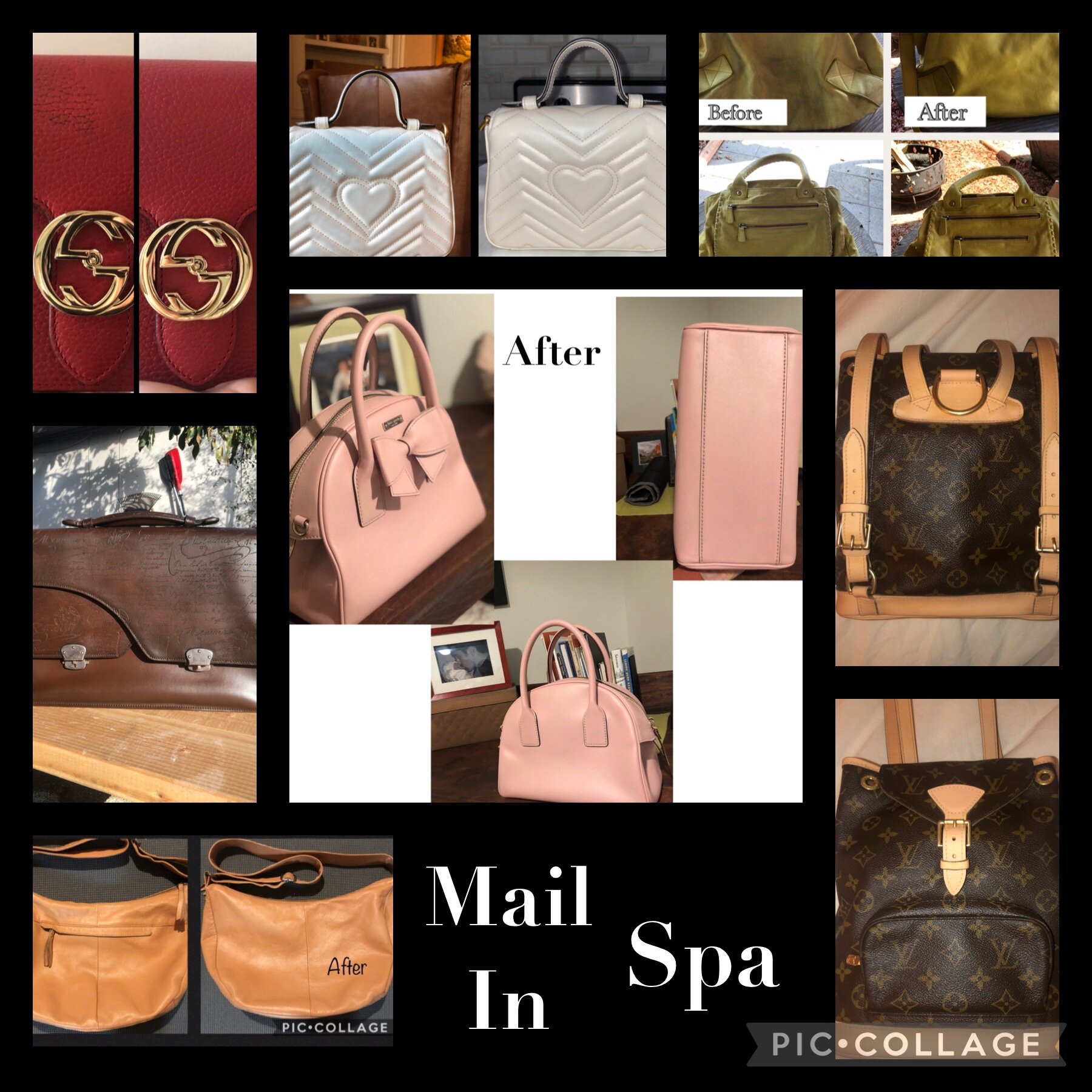
Couture Purse & Leather Bag Spa!
Purse Spa services, drop off or mail in.
We now proudly offer San Diego’s finest “Purse Spa” services to freshen up the look of your couture bag, briefcase, or purse. This includes a deep cleaning of the inside canvas to the outside leather. Touching up color on the leather areas when needed, polishing the buckles and other hardware. You can even mail in your bag from all over the US, just send over some pictures of your bag to get an estimate to our email at 833dblther@gmail.com or text them to our bag specialist at 503-890-5408.Prices start a $75 and go from there depending on size and or restoration level.
What to do if you have a spill on your leather?
Flush leather with distilled water
It happens to most of us at one time or another, we accidentally spill something on our beloved leather furniture or clothing. In most cases the best thing to do is wipe it up gently with a clean damp rag immediately. Use distilled water on your rag for aniline and unfinished leather types.
If you spilled abrasive cleaner or something alcohol based it may remove some of your color unfortunately. But no worries we or any reputable leather restoration company that provides custom color matching can re color the area, just don’t rub the area aggressively or use grocery store cleaners or wipes because you can damage the texture of the leather. Remember you can do more harm than good. Water is the best cleaner, many products on the market aren’t very good. We only recommend advleather.com for purchasing a real leather cleaner. (no affiliation to our company)
If you have a finished leather with integrity in its top coat there should be no residual stain. If you have a aniline or raw leather even water will stain the area, these leather types don’t have much of a protective top coat. Try cleaning the whole panel with a cloth dampened with distilled water to see if you can evenly wet the leather while trying to remove the stain, sometimes this prevents a ring. If there’s still a ring or stain call us for further help. But as we said above DONT use cleaners or rub too hard, you’ll cause more damage and it’ll be more difficult to repair. When cushion covers are removable you can try to flush out stains with DISTILLED WATER.
*if blood, dog or cat urine is the culprit immediately use the flushing method above until there’s no smell, for older urine try Natures Miracle enzymatic product
If the spill is nail polish, gently remove what you can while its wet while being careful not to spread it around, then you’ll have to call us to remove the residual and recolor the area.
If the spill is coconut oil or food grease you wont be able to get it out your self, we have special oil extraction professional products we use to remedy these spills, so give us a call.
If you still see a stain don’t panic in most cases we can help , just give us a call if your in San Diego County at 833-325-8437
Bonded , PU, and Faux Leather
cleaning leather
So many customer are being sold bonded , PU, bicast or faux leather as “Real Leather”. Be very careful to check the materials ( tags) used in the making because even high end companies like Natuzzi are using these manufactured leathers that do not wear well for your investment. Many couches and recliners will have genuine leather on the seat top and back cushion panels but then have faux leather on the sides and backs. Some manufactures even sneek in some vinyl panels. These pieces are often still sold at high prices too! You wont be sold the pieces of furniture with these facts honestly told to you so do your research! These so called leathers do not wear and age well like genuine leather, aren’t a great investment, and most are impossible to repair.
So what are the differences in all the different faux leathers?
Bonded Leather: Is made up of particles or scraps of leather ( think pressed board ). These very thin scraps are then rolled together using adhesives to bind the fibers together, onto a paper backing. A polyurethane coating may be added and embossed to create the texture of real leather. Most bonded leather only contains 10 to 20 percent real leather. It is not durable and is much like paper not being able to have moisture in contact with it. Because it’s so thin, It will crack and peel off of the mesh backing fairly quickly after your purchase, in some cases in only 1 year. Once this starts there is no way to stop the peeling not repair it. Be very careful as to which cleaners you use. Make sure it is mild and without alcohols or oils.
PU or Faux Leather: is a little bit more durable. It is an artificial leather made of thermoplastic polymer. PU leather will be completely vegan. PU leather, is not going to be as durable as real leather, but it will be more durable compared to bonded leather.
Bicast Leather: has actual leather in the make up, is made similar to bonded except they use the fibrous part of cowhide leftover from manufacturing real leather and add a layer of polyurethane on top. Bicast has a bit more durability than bonded. Like bonded be very careful as to which cleaners you use on it. Make sure it is mild and without alcohols or oils.
Our best advice is always to buy genuine leather , even a used leather couch or chair can be restored to look like new at a fraction of the cost of buying new. Foam can be added to fill sagging pillows or seats that need more structure. Stains can be colored over. There area some beautiful pieces out there that people are just wanting to get rid of, sometimes even for free. Try apps like Offer Up or Cherish for higher end brands.

Bonded Leather
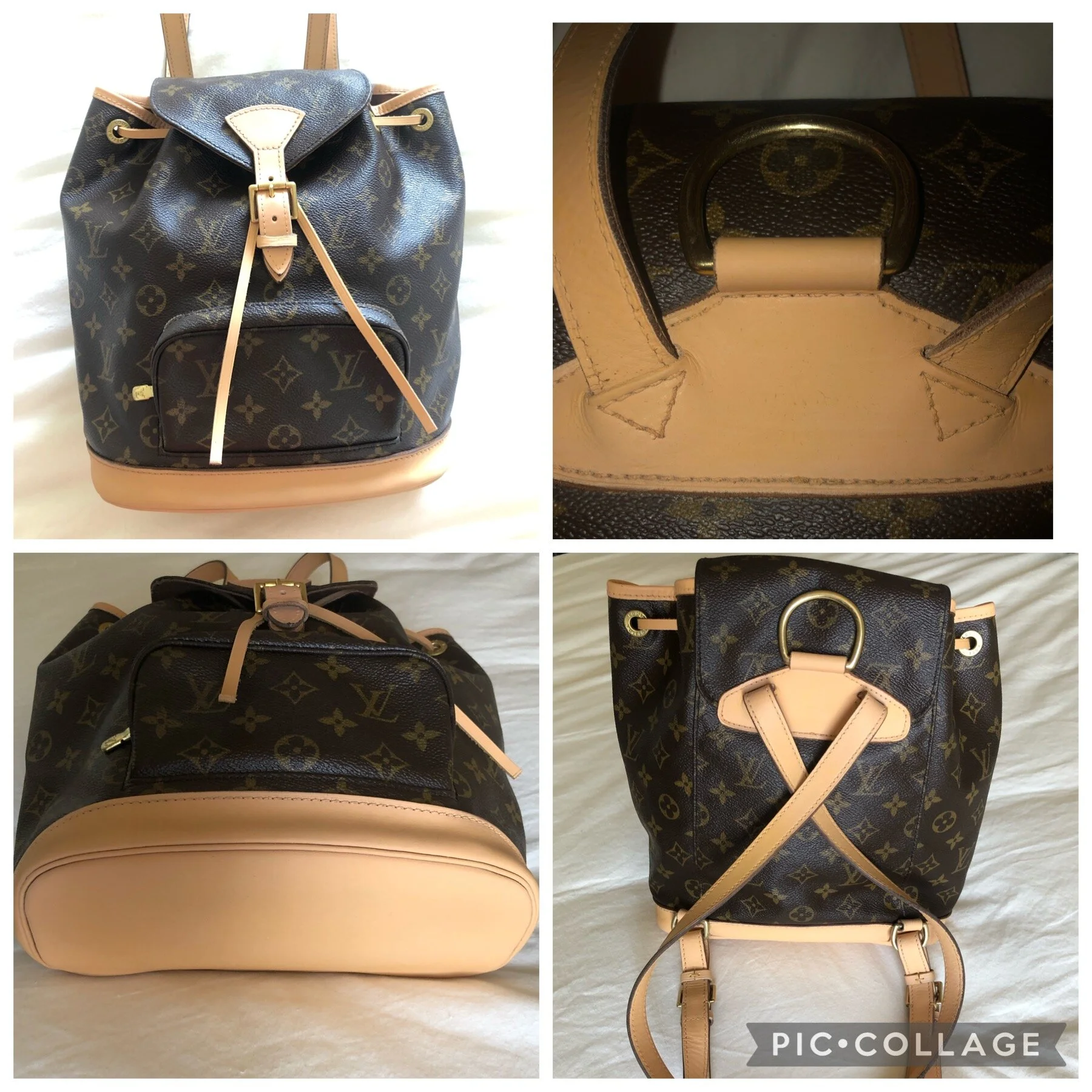
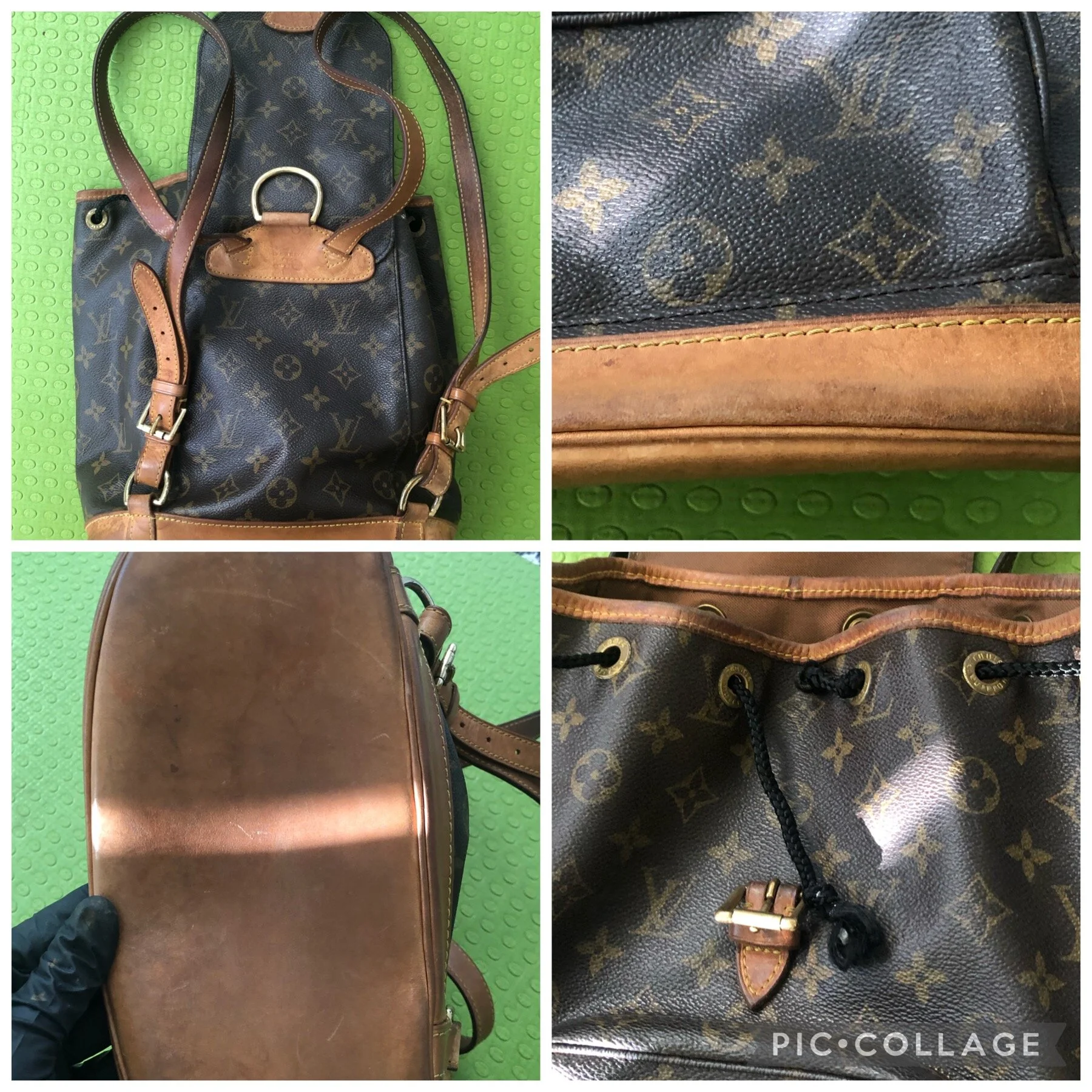
Couture handbags
We are pleased to announce we now specialize in working on cleaning couture bags. We have pictures in our portfolio of restorations of Luis Vuitton, Kate Spade, Gucci as well as some boutique leather brands. We are working on not only the leather on the outside but we are cleaning the inside fabric when possible. And of course we can cover over stains or restore all the color back to new when needed. Send us pictures of your bag, backpack, purse , or attaché to our e mail at 833dblther@gmail.com and we will give you a quote. We also accept mail in pieces when your not in the San Diego area.
Which type of leather do you have?
Simply put, finished leather color is from a pigment coating on the leather, whereas unfinished is from a dye in the leather. Finished leather is stain and fade resistant but can sometimes lack that deep richness in color unless you have a two toned finish. It also tends to be a bit stiffer. Unfinished leather is soft and natural-looking but fades and stains readily. Unfinished leather tends to be more expensive but doesn’t last as long unless properly cared for. Aniline leather is considered unfinished, its somewhere in between the two as it has most of its color on the inside of the leather with a little on the surface, this leather scratches easily and is not stain resistant. It needs cleaning and conditioning regularly to stay beautiful! Oil pulled leather is another finish, mostly popular with companies like Restoration Hardware. This dye is suspended inside of the leather. It has a deep beautiful look with a higher sheen. It also can get scratch marks easily but that can be remedied with heat and moisture treatments.
How to clean your new leather?
Congratulations on your new leather purchase! you have made a smart investment that will last you years and years. But how do you care for this new addition? First things first, do a little research and find out what type of leather you have, whether it is pure Aniline, Semi Aniline, Unfinished, Finished, Bonded, Nubuck, or Suede. Each needs a different level of care so education is key.

Aniline has this look

Finished Leather

Nubuck and Suede
The one and only thing you should be doing every week, to any type of leather , is wiping it down with a dry cloth for unfinished or aniline leather, or a slightly damp cloth for finished leathers. You may think there is nothing there to wipe off, but it is there and builds up over time. So wipe it down WEEKLY!!
For nubuck and suedes buy a soft suede brush and use this to remove dirt and freshen up the nap. These leathers are impossible to clean with cleaners without effecting the nap so its very important that you brush them regularly or call us for an abrasion cleaning before you really see signs of wear and usage. you cannot reverse the damage of body oils or dirt stains once they are there.
For aniline and finished leathers clean them every 6-12 months depending on how heavy the usage is you need to deep clean with a cream cleaner that’s have leather appropriate solvents as well as being pH balanced for leather. Apply the cleaner with personal shower scrub gloves you’ll find at any store with bath products. Apply the cleaner and in a circular motion in 6x6 areas at a time and wipe with a T shirt cloth. Repeat as necessary. This is laborious work for some so feel free to call us if you want a professional cleaning. Follow up with a good conditioner with protective properties. We only recommend ADVleather.com for cleaners and conditioners. We do not recommend leather wipes!
Also one option you have for protecting aniline, semi aniline, or raw leather is to have us apply a clear protective top coat to your leather to make it easier to clean and to hold in its natural oils . It also helps to keep out accidental spills, human body oil stains, animal oils and saliva. Our pH is incompatible with leather, so when it accumulates over time , not only does it cause a stain but you will see cracks as those oils slowly eat away at your leather. Spills on these types are almost impossible to clean off and you’ll need to contact a professional. So protection before staining is very smart to do.
Next time we will discuss more in depth about the types of leather and different ways to care for them.
Thanks for reading! feel free to ask any questions.